
Why Are Auctions
Trusted in Japan?
In Japan, most used vehicles pass through auction networks before reaching dealerships. These auctions are where dealers, wholesalers, and exporters source their vehicles — before they ever appear on the retail market.
Japan's Vehicle Auction Market
Japan's vehicle auction market operates at a national level, forming one of the largest wholesale automotive systems in the world.
Source: Official auction reports published by USS auto auction
How the Market Actually Works
Dealerships rely on auctions as their primary sourcing channel
Market prices are determined through real-time bidding
Vehicles move through a structured and transparent system
Auctions are not separate from dealerships — they are the system that dealerships depend on. Vehicles are first sourced, evaluated, and priced within these auction networks before being selected and offered to customers at retail.
How Auctions Work
Vehicle auctions in Japan operate on scheduled auction days, where vehicles are inspected, listed, and offered for bidding within a controlled system used by licensed participants.
Vehicle Entry
Vehicles enter the auction system from dealerships, companies, lease returns, and private owners. Before listing, each vehicle passes through the auction facility for inspection and evaluation.
Inspection & Auction Sheet
Each vehicle is inspected before listing by trained inspectors working under the auction operator. The inspection follows standardized criteria used across auction networks.
What is recorded:
- ■Exterior and interior condition
- ■Mileage verification
- ■Signs of repair, wear, or damage
- ■Mechanical observations
- ■Overall condition grading
The results are compiled into an official inspection report, commonly known as the auction sheet. This report includes written remarks and a condition diagram, providing a clear and consistent view of the vehicle's condition.
How to Read an Auction Sheet
Below is a simplified translation of a standard Japanese auction inspection sheet, highlighting the key areas that relate to condition and grading.
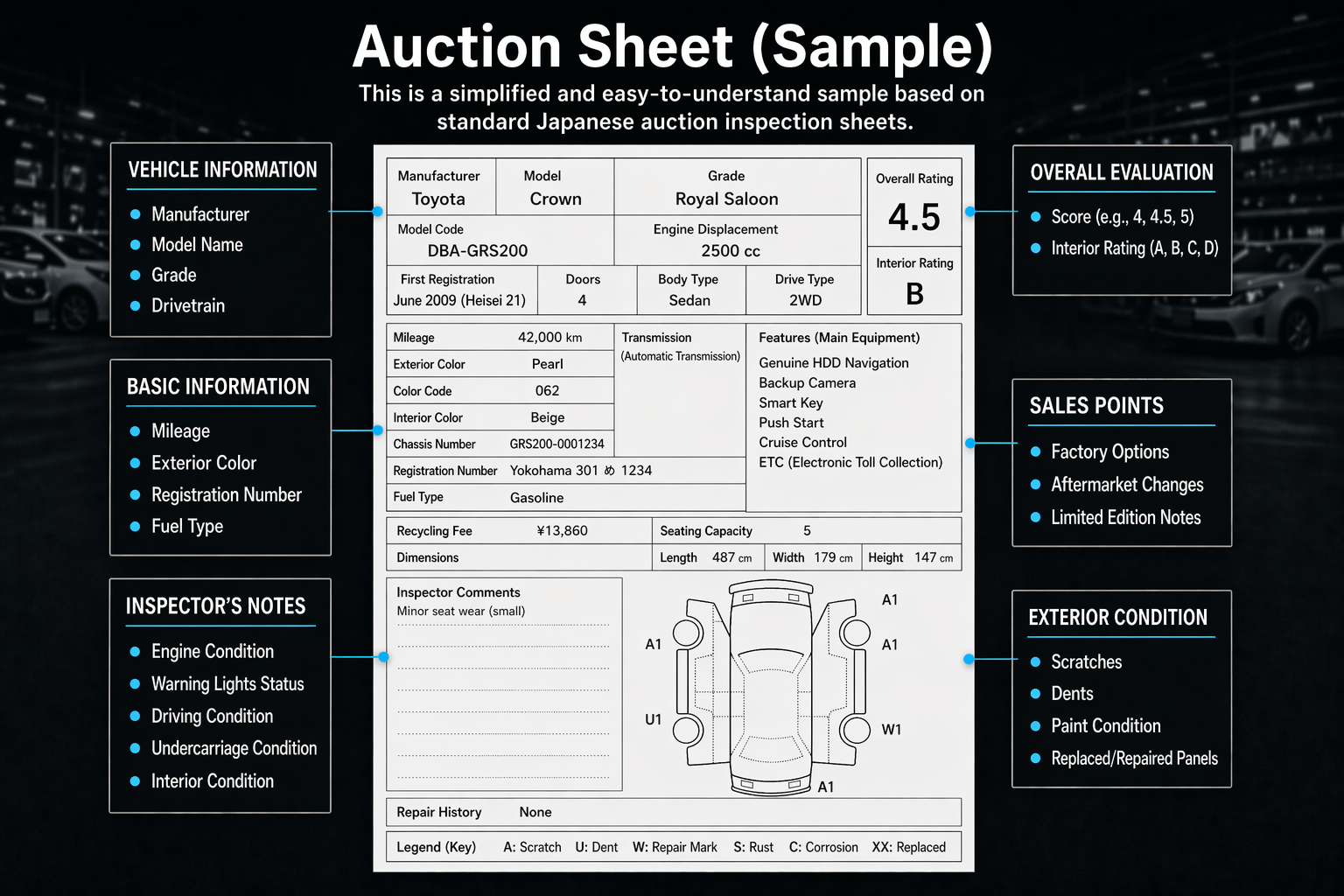
A sample of the actual layout of an official auction sheet
Listing in the Auction System
Once inspection is complete, the vehicle is listed. Each listing includes:
- ■Auction sheet (inspection report)
- ■Vehicle photographs
- ■Basic specifications
Bidding
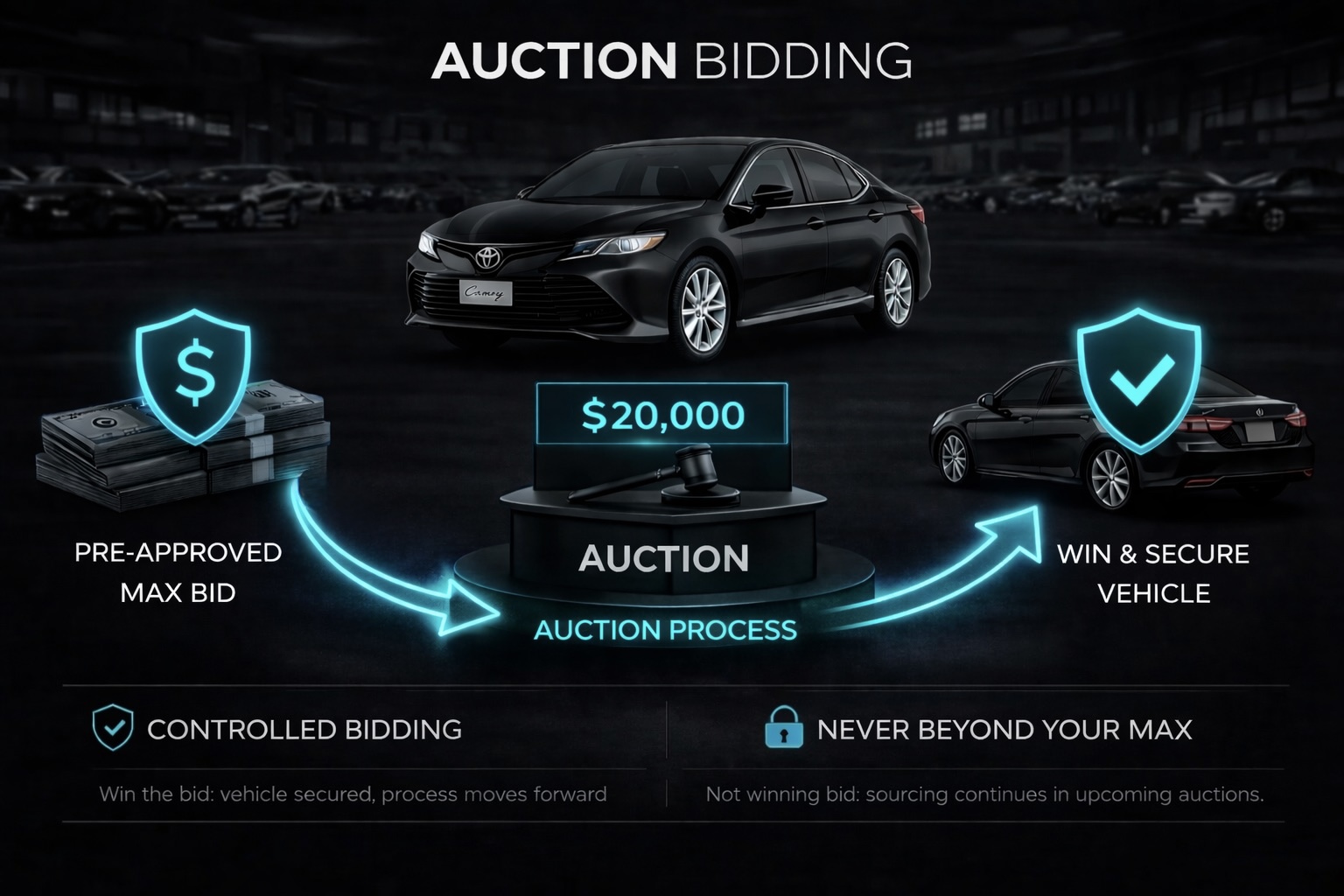
On the scheduled auction day, vehicles are presented through a live bidding system. Licensed participants place bids in real time as the price increases. Each vehicle is sold to the highest bidder once bidding concludes. If the reserve price is not met, the vehicle may remain unsold and be offered again in a future auction.
Japanese Auction Grade Guide
Japanese auto auctions use a standardized grading system to indicate the overall condition of a vehicle at the time of inspection. While grading may vary slightly between auction houses, the general meaning remains consistent.
Near-New
Near-new condition with very low mileage and minimal wear.
Excellent
Excellent condition with only minor signs of use.
Very Good
Very good condition with light cosmetic imperfections.
Good
Good overall condition. May include small scratches, dents, or interior wear typical for its age.
Average
Average condition with visible wear. Minor repairs or touch-ups may be required.
Lower Grade
Often requiring multiple repairs or restoration. In some cases, may include vehicles affected by hail damage.
Poor / Special
Poor condition or special-condition vehicles. May include heavily worn, modified, or damaged units.
Repair History
Indicates past structural or accident damage and requires careful inspection.
Accidental
Vehicles in accidental condition, non-drivable, or not suitable for standard grading.
Our Quality Assurance
Auction grades provide a general indication of a vehicle's condition, but they do not reflect the full picture. Every vehicle is carefully reviewed beyond the grade, including the full auction sheet, inspector comments, repair history, and condition details.
This ensures an accurate assessment and that only vehicles meeting our quality standards are selected — so you can buy with confidence.
What This Service Covers
Our service provides structured access to Japan's vehicle auction network, along with full support throughout the sourcing and purchase process.
- ■Access to auction inventory across major auction groups
- ■Vehicle sourcing based on your requirements
- ■Review and interpretation of inspection reports (auction sheets)
- ■Bidding execution within your approved budget
- ■Purchase coordination and process handling
Domestic Vehicle Sourcing (Japan)
International Vehicle Sourcing (Export)
■A single flat service fee per vehicle — no tiers, no percentage of the vehicle price
■It is separate from the vehicle price, auction fees, and any additional services
■Vehicle pricing reflects actual auction results, with no hidden markups
Documentation & Delivery
For Vehicles Within Japan
Vehicles purchased for domestic use are prepared for handover based on your requirements:
- ■Registration procedures, inspection, documentation
- ■Vehicle preparation, maintenance, servicing
- ■Interior and exterior detailing, glass coating
- ■Domestic transport from the auction location
For International Export
Vehicles purchased for export are prepared through a structured export process:
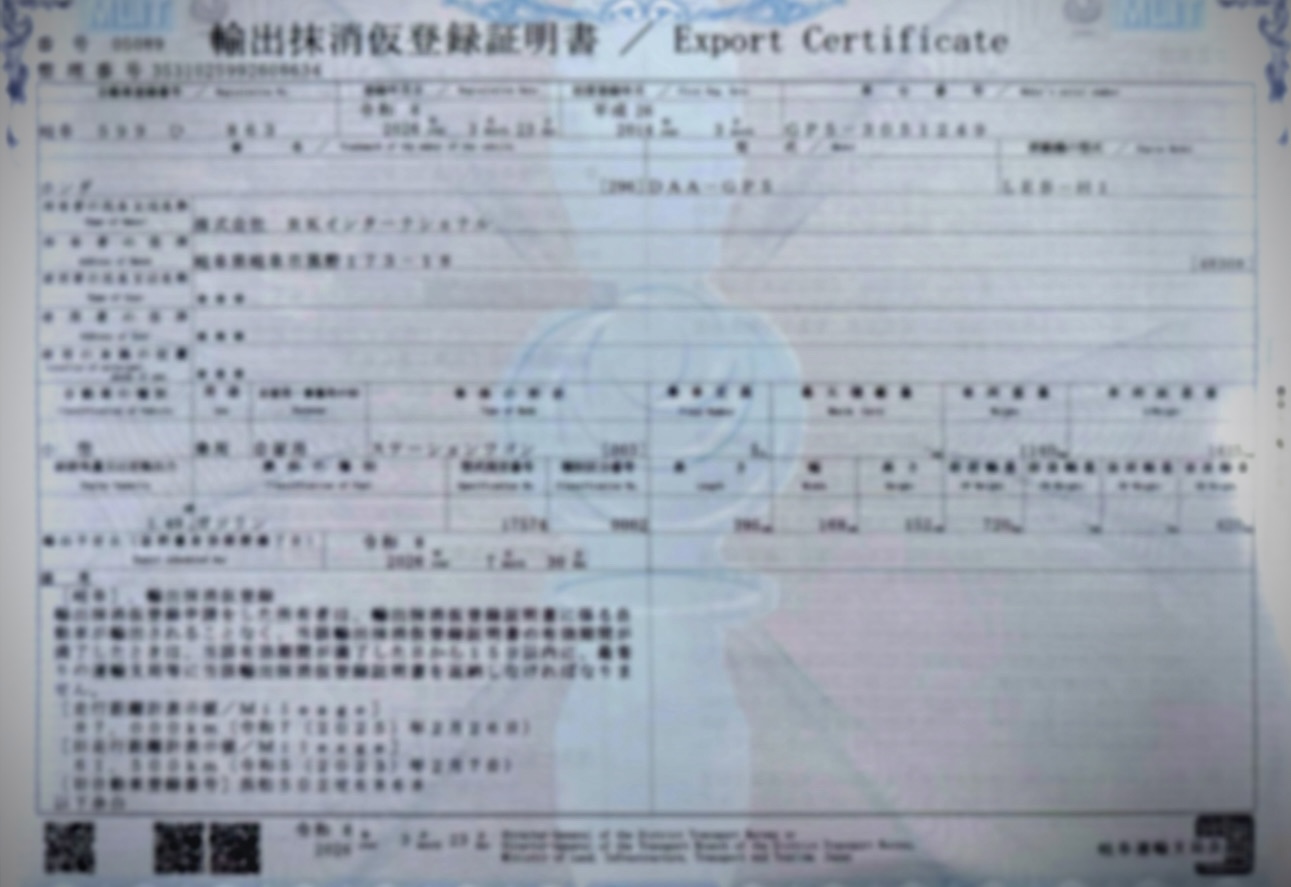
Sample Export Certificate (details partially hidden for privacy)
- ■Export documentation and deregistration
- ■Official export certificate issuance
- ■Preparation for shipping
Official Auction Invoice
Unlike most exporters, we share the official auction invoice with every purchase — the exact document issued by the auction house, showing the precise amount paid. No adjustments, no markups hidden in the numbers.
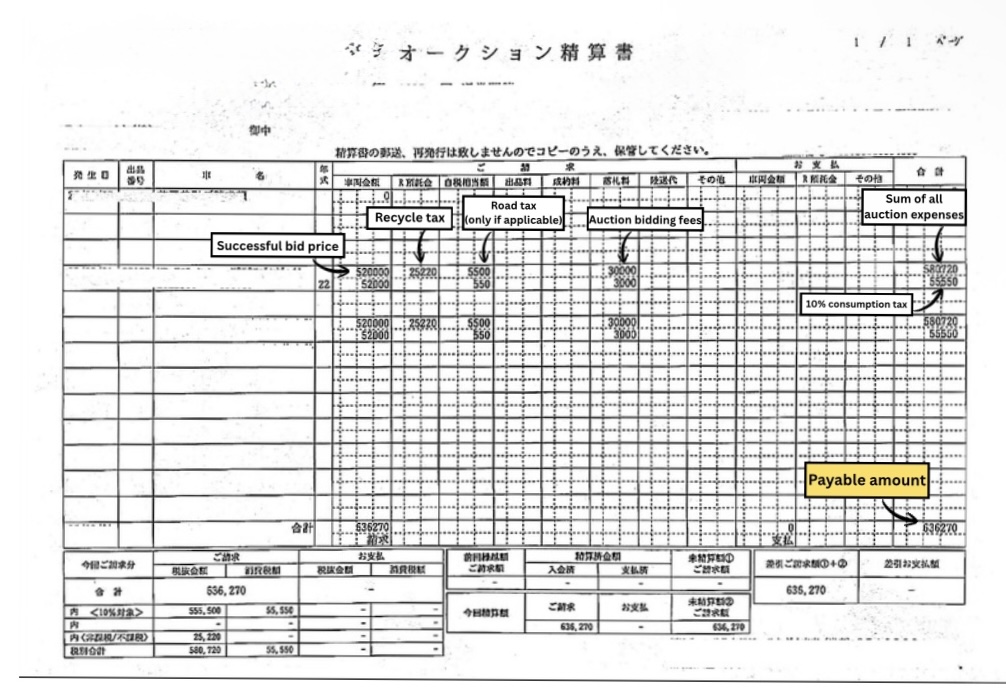
Sample Auction Invoice (details partially hidden for privacy)
Issued by the auction house
The invoice comes directly from the auction operator — not generated by us.
Exact purchase amount
The figure shown is what was paid at auction. No adjustments are made before sharing.
Shared with every purchase
The invoice is provided as standard, not on request. It is part of the process.
Basis for your final invoice
Your invoice from us is built on top of this document — fully traceable.
Payment & Transactions
All transactions are conducted through our registered corporate bank account in Japan.
Payments must be made by the customer placing the order and match the invoice details.
Third-party payments are not accepted unless verified in advance.
Each transaction is linked to a specific vehicle and supported by corresponding documentation.
Refunds, where applicable, are issued only to the original sending account.
Global Shipping Methods
Vehicles are shipped from Japan using two primary methods. The appropriate method is selected based on the vehicle, destination, and your preference.
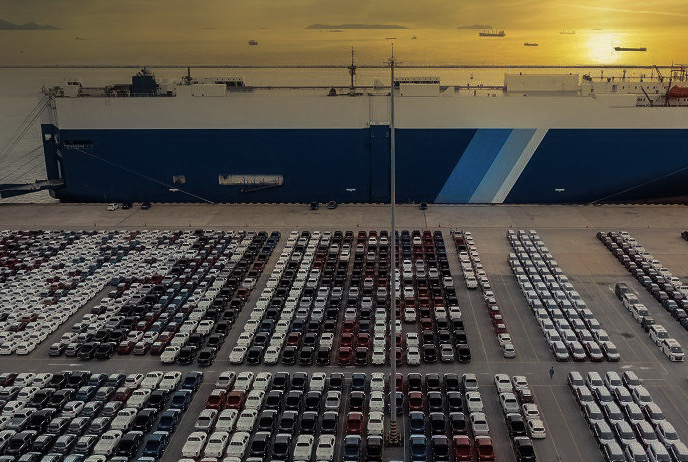
RoRo
Roll-on / Roll-offVehicles are driven directly onto the vessel and secured inside the ship for transport. The most commonly used and cost-effective method.
Suitable for standard, running vehicles.
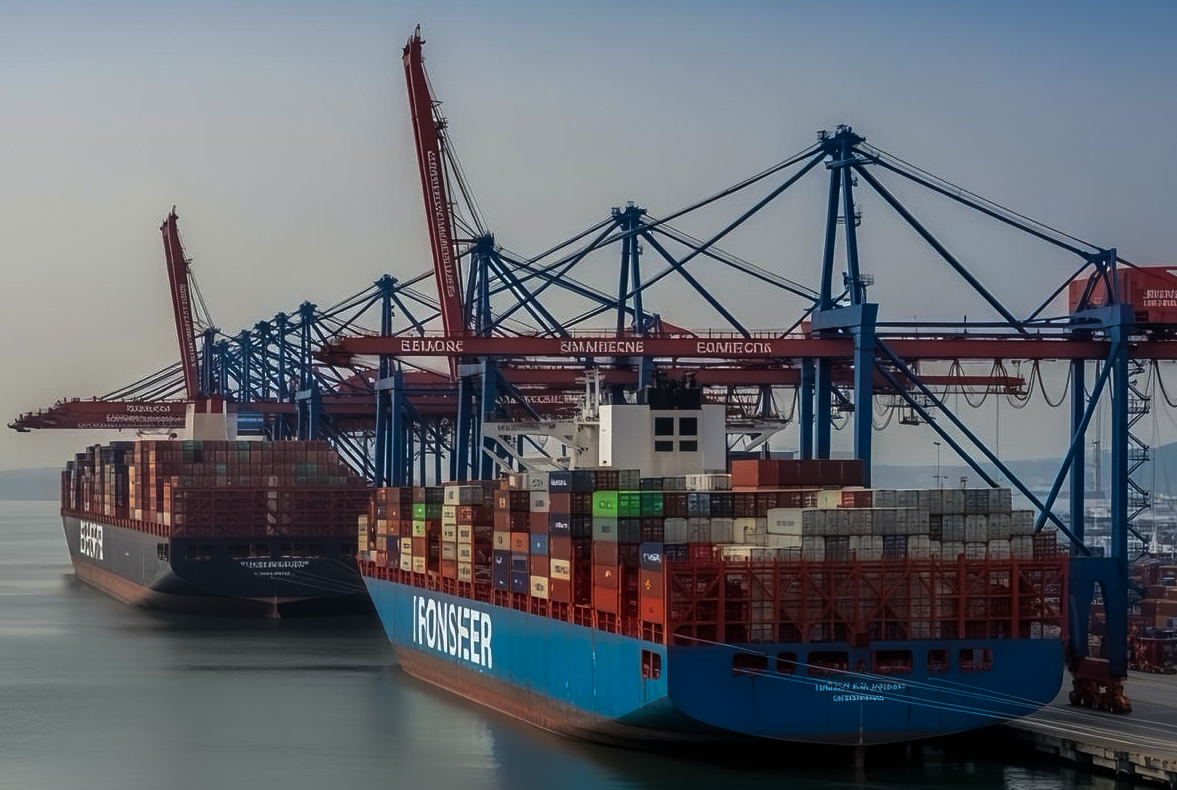
Container
Enclosed Container ShippingThe vehicle is loaded into a container and secured for transport. Provides a higher level of protection.
Used for high-value or non-running vehicles, or when shipping spare parts together.
Why Choose Us
Direct Access
Direct access to Japan's auction network
Transparent Pricing
Pricing based on actual auction results, verified through official invoices
No Hidden Markups
No hidden markups or variable commissions
Structured Process
A structured and transparent process from sourcing to delivery